
How Hair Grows: The Growth Cycle, Shedding and Healthy Hair Care
Medical review completed by Dr. Laiba Tul Jannat on 7 October 2026.
Hair care becomes easier to understand when you know what happens beneath the scalp. A strand can fall out during a normal cycle, break because it is damaged, or become thinner because of a hair-loss condition. Those changes need different explanations.
This guide introduces the cycle and gives you a starting point for asking better questions about your hair.
The follicle and the strand do different jobs
The follicle is the structure in the skin that produces a hair fibre. The visible strand has no metabolic activity of its own. Products can improve the way a strand feels or reduce damage, but caring for its surface is different from treating a condition that affects the follicle. [1]
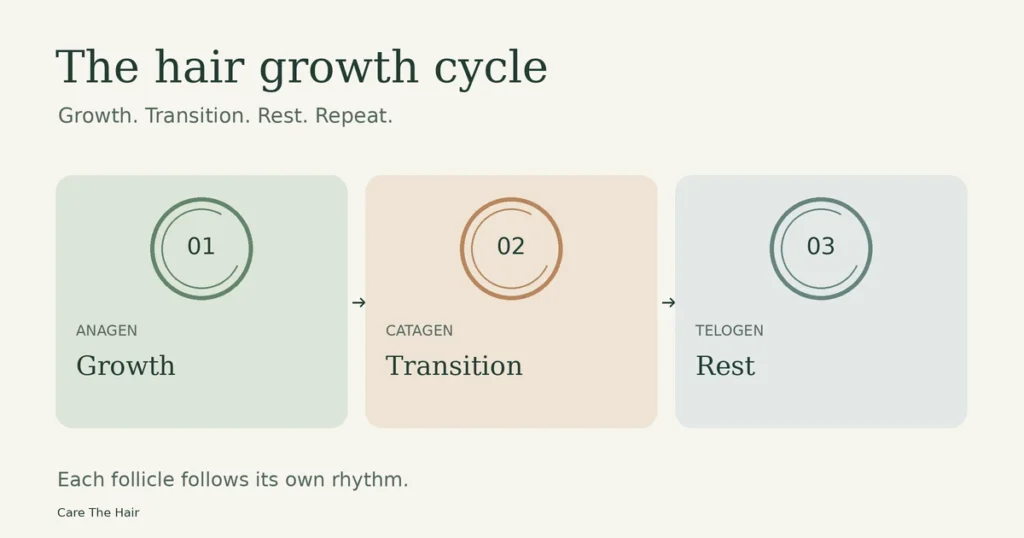
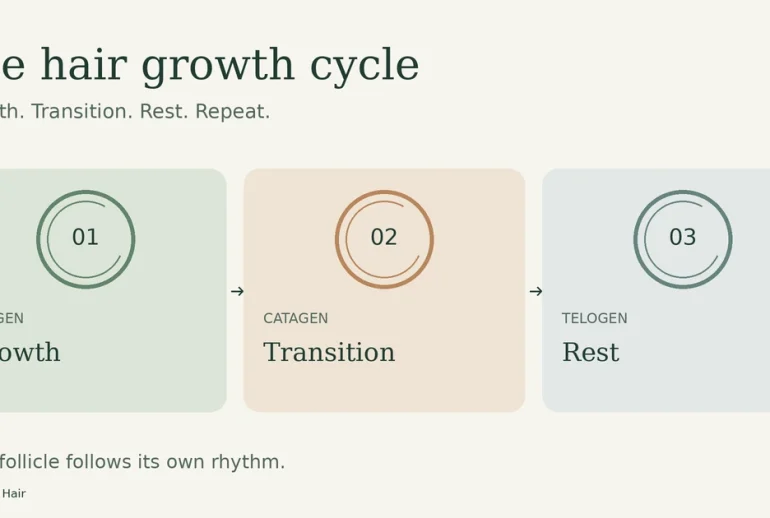
The three main phases of the hair growth cycle
| Phase | What happens | Approximate duration for scalp hair |
|---|---|---|
| Anagen: growth | The follicle actively produces hair. | Typically 2–6 years |
| Catagen: transition | Growth stops and the follicle changes structure. | About 2–3 weeks |
| Telogen: rest | The hair rests before the next growth cycle. | About 3 months |
Shedding accompanies the turnover of hairs. Follicles are at different stages, so the whole scalp does not grow or shed in unison. These durations describe a typical cycle; they are not a personal prediction. [1]
Some shedding is normal
The American Academy of Dermatology describes roughly 50–100 shed hairs a day as normal. Finding hairs on a brush therefore does not automatically mean a follicle has stopped producing hair. [2]
Excessive shedding can follow childbirth, a fever, surgery, major stress or substantial weight loss. It may become noticeable months after the event. That delay can make the connection easy to miss. Some people also have more than one cause of hair loss. A clinician can help distinguish them. [2,3]
For a broader explanation, read Why Is My Hair Falling Out?.
Protect the hair you already have
A manageable routine can help reduce damage:
- Choose products that suit your hair type.
- Wash according to how oily or dirty your scalp becomes.
- Apply shampoo mainly to the scalp and use conditioner after washing.
- Detangle gently, starting at the ends rather than pulling through knots.
- Absorb water gently with a towel or T-shirt instead of vigorous rubbing.
- Limit excessive heat; use lower settings and heat protection when styling.
These habits support the condition of the hair shaft. They should not be presented as a cure for every cause of thinning. [4]
Supplements are not a universal growth plan
An assessment may identify a deficiency or another underlying problem. A dermatologist can recommend relevant testing based on the history and examination; everybody does not need the same blood-test package. [3]
The AAD advises taking biotin, iron or zinc supplements for hair loss only when testing shows a deficiency. Extra nutrients can be harmful when levels are already adequate. A balanced diet and a clinician’s advice are more useful starting points than buying several high-dose hair supplements. [3]
When to get help
Speak with a clinician if you are worried about hair loss. Hair loss can sometimes signal an underlying condition, and it can affect emotional wellbeing. Seek an assessment before committing to expensive treatment packages. No treatment works for everyone. [5]
The useful question is: what is causing this change in my hair? Understanding the cycle helps you describe the problem, but an article cannot establish the diagnosis.
General educational information; not a substitute for personal medical advice.
Sources
- DermNet: Hair shedding. Hair structure and cycle timings.
- American Academy of Dermatology: Hair loss or hair shedding?. Normal shedding and delayed shedding after triggers.
- American Academy of Dermatology: Hair loss—diagnosis and treatment. Assessment, targeted testing and supplement limitations.
- American Academy of Dermatology: Tips for healthy hair. Gentle washing, detangling and heat care.
- NHS: Hair loss. Assessment, treatment limits and emotional support.