

Hair Growth Science
PRP for Hair Loss: Benefits, Side Effects and What to Expect
A clinic offers a treatment made from your own blood. The promise sounds appealing: fewer hairs falling out and better coverage, without a hair transplant.
That is often how people first hear about PRP for hair loss.
There is research behind the treatment. Some studies have found improvements in hair density. But the results are mixed, and the way PRP is prepared can differ between clinics. It deserves a closer look before you commit to a course. [1],[2]
Here is what PRP involves, what it may achieve, and which questions are worth asking.
What Is PRP Hair Treatment?
PRP stands for platelet-rich plasma. Plasma is the liquid part of blood. Platelets are small blood components involved in clotting and healing.
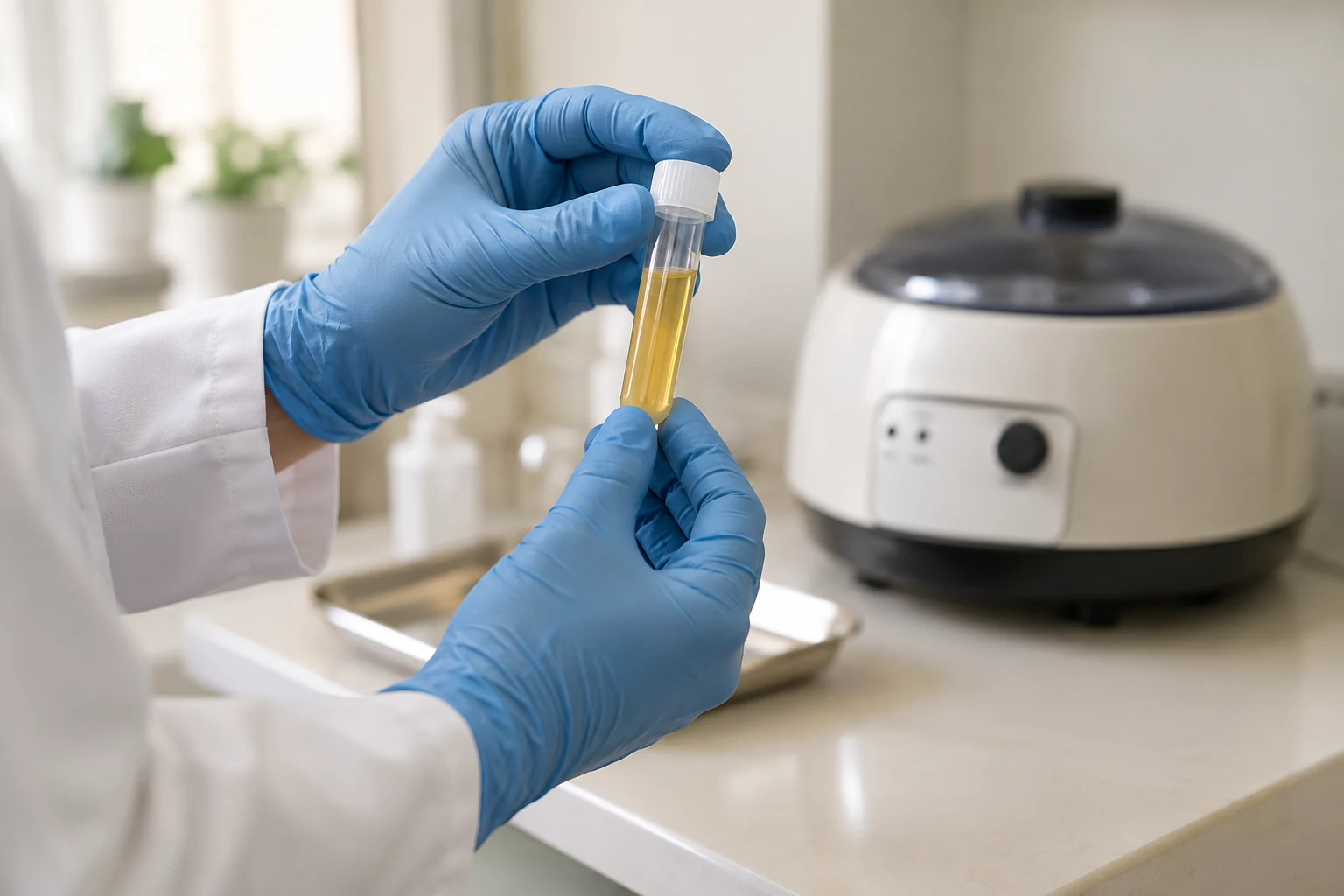
During PRP treatment, a clinician takes a sample of your blood. A machine called a centrifuge separates it into parts. The prepared platelet-rich plasma is then injected into areas of the scalp.
Platelets release growth factors. These are signals involved in tissue repair. Researchers are studying how those signals may support hair growth. The exact effects are not fully understood. [3]
PRP is a medical procedure. It is not a hair oil, a supplement or a transplant.
Does PRP for Hair Loss Work?
The most useful answer is: PRP may improve hair density in some people, particularly those with pattern hair loss. It does not work for everyone.
A 2024 systematic review included 14 studies involving 431 people with androgenetic alopecia. The pooled results favoured PRP for hair density. However, the researchers rated the evidence as low quality. The studies differed greatly, and there were signs of publication bias. [1]
A larger 2025 review assessed 43 randomized controlled trials involving 1,877 participants across alopecia studies. It found benefits for hair density and reduced hair loss. It did not find a significant overall benefit for hair thickness. The authors still called for better, more standardized trials. They also disclosed financial links to a company involved in plasma technology. [2]
Individual trials have not all found the same benefit. In one study of 35 people, hair density increased in both PRP-treated and saline-treated areas. The difference between the two was not statistically significant. [4]
Taken together, this supports cautious interest. It does not support a guaranteed regrowth claim or one success percentage that applies to every patient.
Who Might Benefit From PRP?
Much of the research focuses on androgenetic alopecia, also called male or female pattern hair loss. [1]
PRP may be discussed when hair is thinning and there are still existing follicles in the area. An area that is completely bald is less likely to benefit. [5]
However, “hair loss” is a symptom with several possible causes. A widening part, sudden shedding and a painful scalp need different assessments.
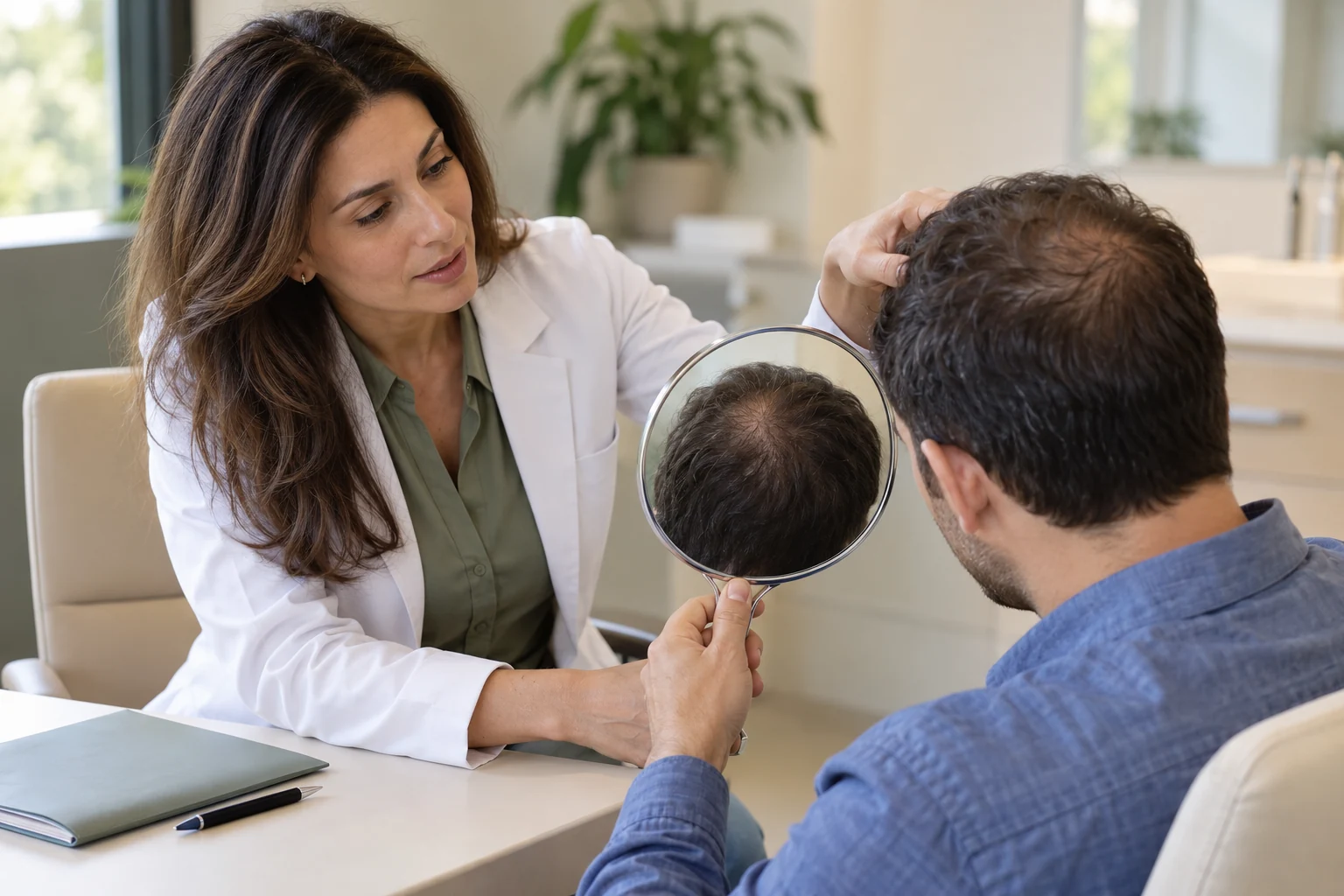
Start with a diagnosis. A dermatologist may examine your scalp and arrange tests if your history suggests another condition. [6]
Our guide to why your hair may be falling out explains common causes. You can also read about female pattern hair loss.
What Happens During a PRP Session?
The usual stages are straightforward:
- Assessment: The clinician checks your diagnosis, health and treatment plan.
- Blood collection: A small blood sample is taken.
- Preparation: The blood is processed to separate the platelet-rich plasma.
- Scalp injections: The prepared PRP is injected into the areas being treated.
Ask how the clinic manages discomfort. Several injections can feel sore, even when fine needles are used.
Appointment length varies. University Hospital Zurich describes around 30–45 minutes for its treatment process. Your clinic should explain what its appointment includes. [7]
You should also receive written aftercare instructions and a contact number for concerns.
How Many PRP Sessions Are Needed?
A commonly used starting course is three sessions, around one month apart. Maintenance appointments may follow every three to six months. This is an example described by the American Academy of Dermatology, rather than a universal schedule. [6]
Clinics use different preparation methods, injection techniques and treatment intervals. This variation is one reason study results are difficult to compare. [5]
Before paying, ask:
- How many sessions are in the initial course?
- When will we assess whether it is helping?
- What would count as a useful improvement?
- What happens if I see no benefit?
A plan should include a review point, rather than an open-ended series of appointments.
How Long Do PRP Hair Treatment Results Take?
Expect a gradual process.
University Hospital Zurich describes possible early changes after two to three months. More noticeable changes may take four to six months. These are examples of clinical expectations, not promises for each patient. [7]
Results may involve less shedding or better coverage. Some people notice little or no benefit. [5]
Agree on how to measure progress before starting. Take photographs with the same lighting, parting and camera angle. If the clinic measures hair density, ask to see the baseline and follow-up measurements.
Changing your hairstyle or lighting can make a photograph look better without showing a treatment effect.
PRP Hair Treatment Side Effects
Possible effects include:
- Scalp tenderness or soreness.
- Redness, itching or swelling.
- Bruising or small amounts of bleeding.
- A temporary headache. [7],[8]
Using your own blood lowers some allergy concerns. It does not make the procedure risk-free. Infection, tissue damage and nerve injury are less common risks associated with PRP injections. [3]
Ask which symptoms are expected and which need medical assessment. Seek prompt advice for worsening pain, spreading redness, pus or fever after treatment.
The clinician’s training, appropriate equipment and careful infection control matter.
Who Needs Extra Assessment Before PRP?
Tell the clinician about your medical conditions and all medicines you take.
Particular issues to discuss include blood or platelet disorders, anticoagulant treatment, active infections, cancer treatment and significant ongoing illness. Mention pregnancy, plans for pregnancy and breastfeeding as well. [8]
This is a screening discussion, rather than a list you should use to approve yourself for treatment.
Do not stop prescribed medicines, including aspirin or anticoagulants, on your own. If a clinic gives instructions that affect your usual medicines, ask it to coordinate with the clinician who prescribed them.
PRP vs Minoxidil: Is One Better?
They are different approaches.
| Question | PRP | Topical minoxidil |
|---|---|---|
| How is it used? | Injections during clinic visits | Foam or solution applied to the scalp |
| What commitment does it involve? | An initial course and possible maintenance visits | Regular use according to the product or treatment plan |
| What should guide the choice? | Diagnosis, evidence, risks, likely benefit and cost | Diagnosis, suitability, side effects and ability to use it consistently |
Minoxidil is an established treatment for pattern hair loss. PRP may be considered alongside other treatments, depending on the person’s needs. It should not automatically replace a suitable medicine because a clinic advertises it as more advanced. [5],[6]
If you already use minoxidil, ask whether to continue and how to manage it around treatment days.
Our minoxidil for women guide explains application, side effects and realistic review points.
How Much Does PRP Hair Treatment Cost?
There is no single useful global price. Costs vary by location, provider, preparation method and number of sessions. [5]
Ask for a written estimate covering:
- The consultation.
- The full initial course.
- Follow-up assessments.
- Likely maintenance appointments.
Check what happens if treatment is unsuitable or needs to stop. A package price is only useful when you understand what it includes.
Consider the ongoing cost, rather than judging affordability by one discounted session.
Aftercare: Follow Your Clinic’s Instructions
Aftercare can vary. Ask when you can wash your hair, exercise, use scalp products and restart any topical treatments.
For example, University Hospital Zurich advises avoiding hair washing and certain activities for 24–48 hours. That is its protocol. Your treating clinician should give instructions for your procedure. [7]
Do not copy a medication or aftercare plan from an unrelated clinic’s social media post.
FAQ
Is PRP a permanent cure for hair loss?
No. Benefits may need ongoing treatment to be maintained. Ask about maintenance before starting the initial course. [5]
Can PRP help women with hair loss?
It may help some women with female pattern hair loss. However, your diagnosis and individual response matter. Results from studies cannot predict your outcome. [1]
Will PRP create new hair follicles?
PRP should not be presented as a way to create new follicles where they no longer exist. It aims to support existing follicles. [8]
Can I stop minoxidil after starting PRP?
Discuss this with your dermatologist. Adding PRP does not automatically mean your existing treatment is no longer needed. [5]
Is PRP painless because it uses my own blood?
No. The blood draw and scalp injections can cause discomfort. Ask about pain control and expected soreness. [3],[7]
Before You Book PRP Hair Treatment
Ask for a clear diagnosis, a realistic treatment goal and a written cost estimate. Make sure there is a plan to assess your response.
PRP may have a place in hair-loss care. The decision is easier when you understand its limits as well as its potential benefits.
Read Next
- Minoxidil for Women: Benefits, Side Effects and Results
- Female Pattern Hair Loss: Why Your Part Is Widening and What Helps
- DHT and Hair Loss: Causes, Treatments and What the Evidence Says
References
- Kieling L, et al. (2024). Is autologous platelet-rich plasma capable of increasing hair density in patients with androgenic alopecia? A systematic review and meta-analysis of randomized clinical trials.
- Anitua E, Tierno R, Alkhraisat MH. (2025). Platelet-Rich Plasma in the Management of Alopecia: A Systematic Review and Meta-Analysis of Clinical Evidence.
- Johns Hopkins Medicine. Platelet-Rich Plasma (PRP) Injections.
- Shapiro J, et al. (2020). Evaluation of platelet-rich plasma as a treatment for androgenetic alopecia: A randomized controlled trial.
- International Society of Hair Restoration Surgery. PRP for Hair Loss: Procedure, Benefits & Costs.
- American Academy of Dermatology. Hair loss: Diagnosis and treatment.
- University Hospital Zurich. PRP treatment for hair loss.
- British Hair and Nail Society. Platelet Rich Plasma (PRP) for treatment of hair loss — patient information.
This article provides general education and does not replace an individual medical assessment.