
Hair Growth Science
Foods for Hair Growth: 8 Everyday Choices for Healthy Hair
When your hair starts thinning, even the weekly food shop can feel confusing. Should you buy more eggs? Start eating salmon? Add a handful of seeds to everything?
There is a useful idea behind these suggestions. Your body needs enough food and nutrients to support normal hair growth. Too little protein, iron or overall energy can contribute to hair loss. [1]
But the phrase “foods for hair growth” needs some context.
A balanced diet supports healthy hair. Correcting a nutritional deficiency may help when that deficiency is contributing to shedding. Eating extra amounts of a nutrient you already get enough of is not a proven shortcut to thicker hair. [1],[10]
Here is how to make food choices that are practical, varied and realistic.
Can food help your hair grow?
Nutrition is one part of the picture. Hair loss can also involve genetics, hormones, illness, medication or a scalp condition.
If a missing nutrient is contributing to hair loss, addressing it matters. However, a healthy diet cannot be expected to reverse every cause of thinning. Different causes need different care. [10],[11]
For example, someone who has been skipping meals may need help improving their intake. Someone with gradual pattern hair loss may need a treatment plan even if they already eat well.
Our guide to why hair falls out explains how these causes differ.
8 foods to include in a diet for healthy hair
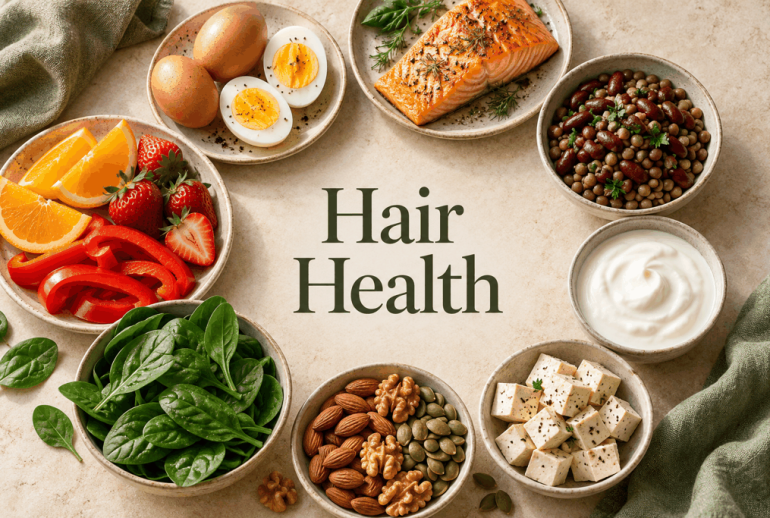
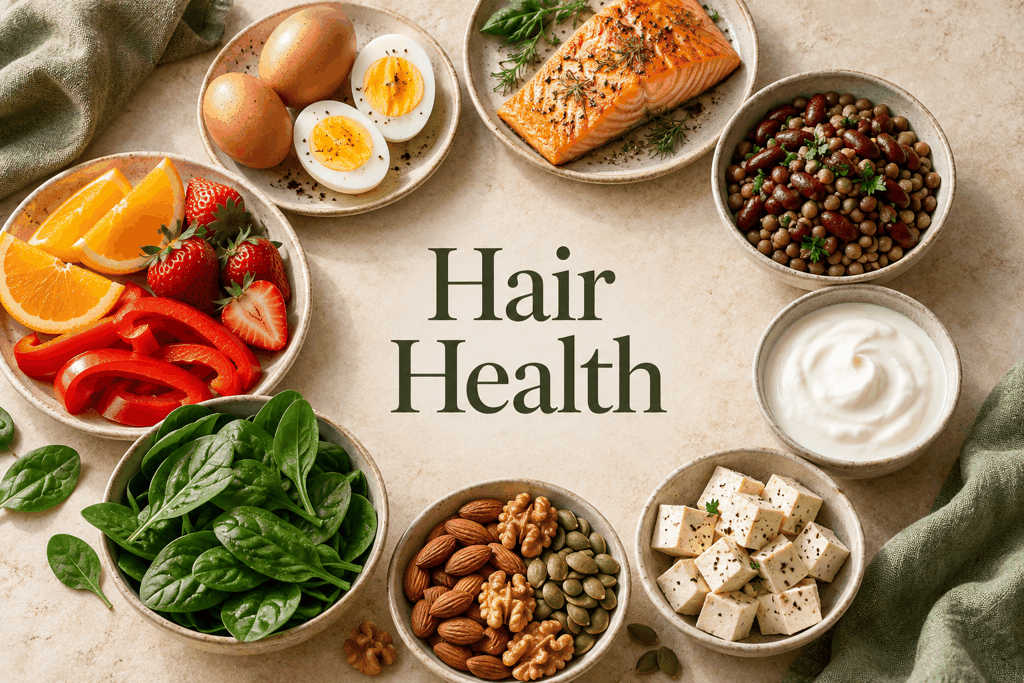
These are useful options, rather than a ranking of foods proven to regrow hair. Choose the ones you enjoy and can eat regularly.
1. Eggs
Eggs provide protein and contain biotin, also called vitamin B7. They are a convenient option for breakfast, lunch or a quick evening meal. [2],[4]
Try a boiled egg with wholegrain toast, or add cooked egg to a vegetable dish.
Eggs often appear in hair-growth advice because of biotin. However, biotin deficiency is rare, and claims about supplements improving hair growth have limited support. There is no special number of eggs you need to eat for your hair. [4]
For more detail, read Biotin for Hair Growth: Does It Really Work?.
2. Lentils and beans
Lentils and beans provide plant protein. Lentils and kidney beans also supply iron. This makes them useful foods to include when building varied vegetarian meals. [2],[3]
A bowl of lentil soup, bean chilli or dal can be an affordable starting point.
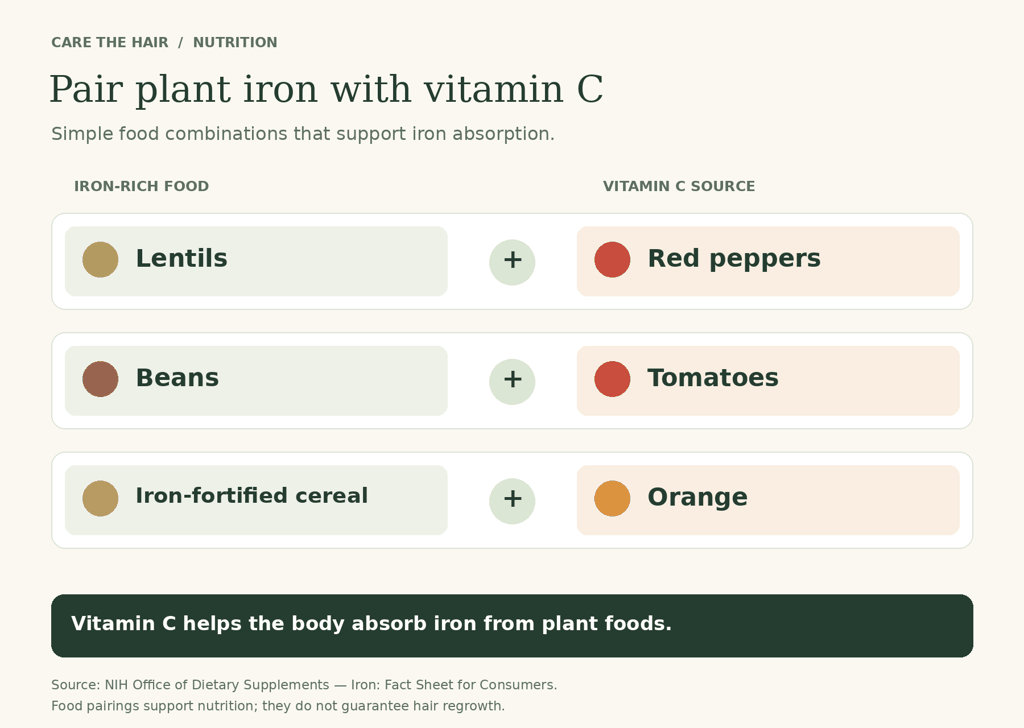
Add tomatoes, peppers or another vitamin C-rich food to the meal. Vitamin C helps your body absorb iron from plant foods. [3]
3. Salmon, sardines and other fish
Fish supplies protein. Oily fish such as salmon and sardines also provides long-chain omega-3 fats. [2],[5]
You can use fresh, frozen or canned options. A simple meal could be baked fish with potatoes and vegetables, or sardines on toast.
These foods have a place in a balanced diet. Their nutrient content does not establish that eating more oily fish will reverse hair loss.
Follow local fish guidance, particularly during pregnancy or breastfeeding, when advice about fish types and amounts can differ. [5]
4. Plain yoghurt and milk
Dairy foods can contribute protein and vitamin B12. Plain yoghurt is an easy addition to breakfast or a snack. [2],[6]
Pair it with oats and fruit, or serve it alongside a meal.
If you prefer a plant-based alternative, compare labels. Check the protein content and whether vitamin B12 has been added. Plant foods do not naturally provide reliable B12 unless they are fortified. [6]
5. Tofu and other soya foods
Tofu and other soya foods offer another way to include protein in meals. They can be especially useful if you eat little or no meat. [12]
Try tofu in a stir-fry, curry or rice bowl. Choose flavours you already enjoy; a familiar meal is easier to repeat than an elaborate “hair growth recipe”.
You do not need to eat every protein food on this list. Having several options makes it easier to build meals around your preferences and budget.
6. Nuts and seeds
Nuts and seeds contain a range of nutrients. Many supply some zinc or biotin, depending on the type. [4],[7]
Sprinkle seeds over porridge, add nuts to yoghurt, or have a small handful as a snack.
Keep them as one part of a varied diet. Adding large amounts is not a proven way to speed up hair growth.
7. Spinach and other leafy vegetables
Spinach is one plant source of iron. It can be added to soups, omelettes, curries or bean dishes. [3]
Think about the whole meal. Spinach alongside lentils and tomatoes offers more variety than repeatedly eating a large bowl of greens on its own.
If iron deficiency is suspected, food changes may be only part of the answer. A clinician may need to investigate the cause and recommend treatment. [10]
8. Oranges, peppers and strawberries
These foods provide vitamin C, which helps the body absorb plant-based iron. [8]
Useful combinations include:
- Lentil soup with peppers.
- A bean salad with tomatoes.
- An orange alongside an iron-fortified breakfast cereal.
- Strawberries with a meal that includes plant sources of iron.
This is an easy way to improve variety without buying specialist products.
Protein for hair growth: are you getting enough?
Low protein intake can contribute to hair loss. But your needs depend on your age, health, activity and other circumstances. There is no single protein target that treats everyone’s thinning hair. [1]
A practical starting point is to notice whether your main meals include a protein food.
That could be eggs, fish, chicken, yoghurt, tofu, beans or lentils. If breakfast is usually just tea and a biscuit, adding a suitable protein food may make that meal more substantial. [2]
If poor appetite, a restricted diet or a medical condition makes eating difficult, a registered dietitian can help assess what you need.
Iron-rich foods for hair growth: when do they matter?
Iron deficiency can be one contributor to hair loss. It is especially important to consider if you have heavy periods, eat little iron-rich food or have a condition that affects absorption. [3],[11]
Iron from plant foods is called nonheme iron. The body absorbs it less readily than heme iron found in animal foods. Pairing plant sources with vitamin C can help. [3]
However, shedding alone does not diagnose iron deficiency.
A clinician may check your blood count and iron stores, including ferritin, when appropriate. They should interpret the results alongside your symptoms and medical history. Avoid choosing an iron dose based on a social media post. Too much iron can be harmful. [3],[10],[13]
Vegetarian and vegan foods for hair growth
A vegetarian or vegan diet deserves the same attention to variety and adequate intake as any other diet.
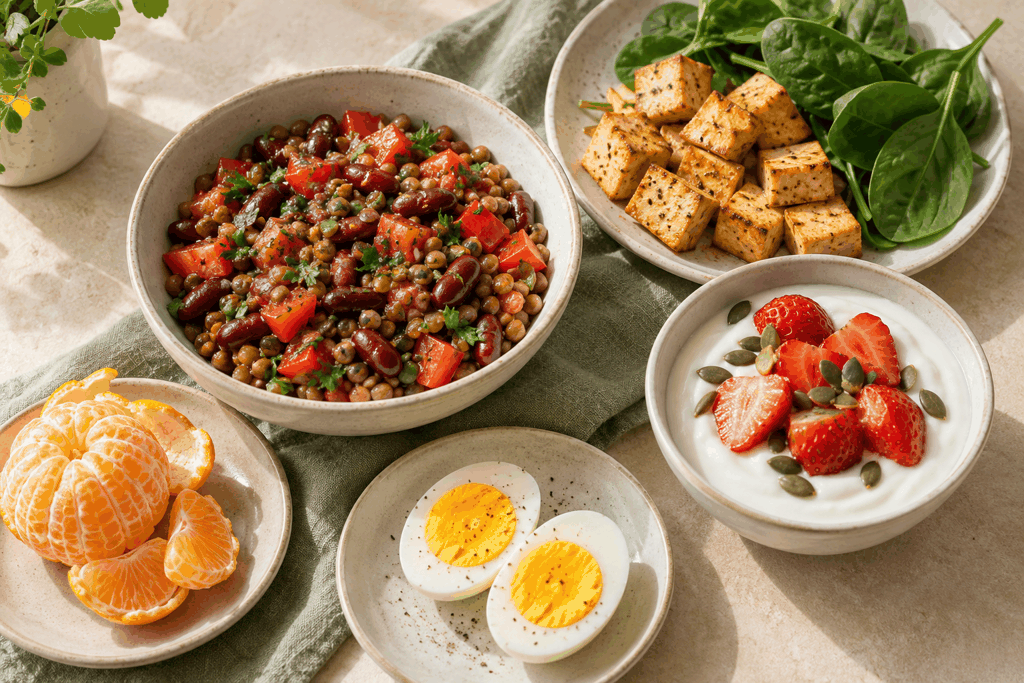
Useful choices include lentils, beans, tofu, nuts, seeds, vegetables and fortified foods. You can adapt meals around your preferences rather than trying to copy a diet that includes foods you do not eat.
Vitamin B12 needs particular attention on a vegan diet. Reliable sources include appropriately fortified foods and supplements. Check labels and get advice about meeting your needs; ordinary unfortified plant foods are not dependable sources. [6]
If you are shedding despite eating well, keep an open mind about other causes. The name of your diet cannot explain the diagnosis by itself.
A simple day of meals
Here is an example of how these foods could fit together:
| Meal | Example |
|---|---|
| Breakfast | Porridge with milk or a suitable fortified soya drink, plus strawberries |
| Lunch | Lentil or bean soup with wholegrain bread and peppers |
| Snack, if wanted | Plain yoghurt or a suitable alternative, with a few nuts |
| Dinner | Fish or tofu with rice and a mixture of vegetables |
This is a set of meal ideas, not a personalised nutrition prescription. Amounts and additions will depend on your appetite and needs.
You can also swap the dishes for familiar foods. Dal, bean stew, egg on toast and tofu curry can all have a place.
Can dieting or rapid weight loss cause hair shedding?
Eating too few calories can contribute to hair loss. Significant weight loss can also be followed by telogen effluvium, a form of excessive shedding. The change may become noticeable a few months after the trigger. [1],[9]
That delay can be confusing. You may be eating more normally again when the shedding begins.
Tell your clinician about recent weight changes, illness and changes in food intake. Avoid responding by cutting out more foods or adding several supplements without advice.
Our telogen effluvium guide explains the link between a trigger and delayed shedding.
Do you need hair growth supplements as well?
Supplements may be appropriate when a deficiency or another specific need has been identified. They are not automatically useful because a bottle says “hair, skin and nails”. [10]
Excess amounts of certain nutrients, including vitamin A and selenium, have been linked to hair loss. More is not always better. [1]
If you already use a multivitamin or another supplement, show the labels to your clinician or pharmacist before adding a hair product. This helps identify overlapping ingredients.
When should you get medical advice?
Book an assessment if your shedding persists, your part is widening or you develop bald patches. Seek advice sooner if you also have scalp pain, inflammation or other symptoms.
Mention fatigue, heavy periods, digestive problems or unintentional weight loss. These details may help your clinician decide what to investigate.
Tests should follow your history and examination. Everyone with hair loss does not need the same panel of nutrient tests. [10]
FAQ
What is the best food for hair growth?
There is no single best food. A varied diet with enough energy, protein and essential nutrients is a more useful goal than relying on one ingredient.
Which fruit is best for hair growth?
No fruit has been established as the best for regrowth. Oranges, strawberries and other vitamin C-rich fruits can help you absorb iron from plant foods. [8]
Can food make hair grow faster?
There is no dependable food shortcut. Improving an inadequate diet may help address a contributor to shedding, but it does not guarantee faster growth.
How long does it take for diet changes to affect hair?
Changes take time. The response depends on the cause of shedding, whether a deficiency is present and whether it has been corrected. Do not judge a new eating routine after a week or two.
Can I improve my diet without buying expensive foods?
Yes. Beans, lentils, eggs, oats, frozen vegetables and suitable fortified foods can be practical options. Build around foods you enjoy and can afford.
Start with your usual meals
You do not need to rebuild your whole diet overnight. Look at a few ordinary meals and ask what might be missing.
Could breakfast include a protein food? Could you add beans to lunch? Could a vitamin C-rich fruit or vegetable sit alongside your plant sources of iron?
Small, repeatable changes are a sensible place to begin. If hair loss continues, finding the cause is the next step.
Read Next
- Biotin for Hair Growth: Does It Really Work?
- How Fast Does Hair Grow? Monthly Growth Explained
- Why Is My Hair Falling Out? 12 Causes and What to Do
References
- American Academy of Dermatology. Hair loss: Tips for managing.
- NHS. Eating a balanced diet.
- NIH Office of Dietary Supplements. Iron: Fact Sheet for Consumers.
- NIH Office of Dietary Supplements. Biotin: Fact Sheet for Consumers.
- NHS. Fish and shellfish.
- NIH Office of Dietary Supplements. Vitamin B12: Fact Sheet for Consumers.
- NIH Office of Dietary Supplements. Zinc: Fact Sheet for Consumers.
- NIH Office of Dietary Supplements. Vitamin C: Fact Sheet for Consumers.
- American Academy of Dermatology. Do you have hair loss or hair shedding?.
- American Academy of Dermatology. Hair loss: Diagnosis and treatment.
- American Academy of Dermatology. Hair loss: Who gets and causes.
- NHS. The vegetarian diet.
- MedlinePlus. Iron Tests.
This article provides general education and does not replace individual medical or dietary advice.