
Hair Loss & Thinning · Guide 8
Alopecia Areata: What Round Bald Patches Mean and What Can Help
In this guide
- What is alopecia areata?
- What does alopecia areata look like?
- Why does it happen—and is stress to blame?
- Could the bald patch be something else?
- What will a doctor check?
- Will the hair grow back?
- Which alopecia areata treatments can help?
- What does the research actually show?
- Do oils, vitamins or a special diet treat it?
- What can you do while waiting for an appointment?
- The emotional side deserves care too
- Frequently asked questions
- Conclusion: understand the patch before choosing a treatment
- Read next
Finding a bald patch raises a different question from noticing a few loose hairs: why has hair disappeared from this particular spot?
Before buying another shampoo or trying a remedy from social media, it helps to understand what might be happening beneath the skin. Alopecia areata is one possible explanation—but other conditions can look similar.
This guide explains the signs, what treatment can realistically offer, and how to take the next step without getting lost in medical jargon.
This article provides general health information, not a diagnosis or a personal treatment plan.
What is alopecia areata?
Alopecia areata is a condition in which the immune system mistakenly targets hair follicles—the small structures in your skin that produce hair. It often causes one or more round or oval bald patches.
“Autoimmune” simply means the body’s defence system has started reacting against part of the body itself. Here, that reaction interrupts hair growth.
Importantly, the follicles usually remain capable of producing hair. That makes regrowth possible, although it does not tell us when it will happen or whether it will last. The American Academy of Dermatology explains this immune reaction in its patient guidance.
What does alopecia areata look like?
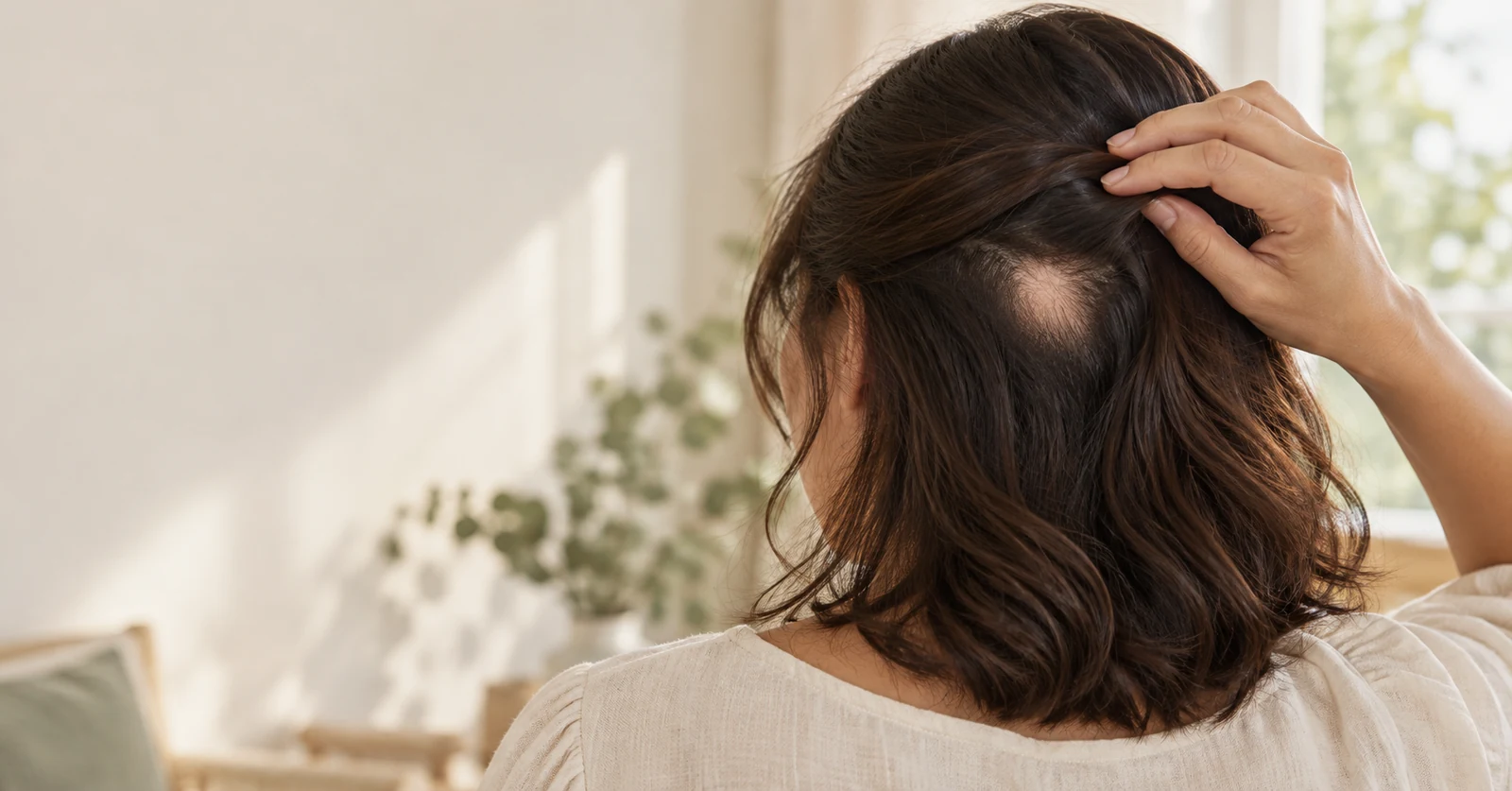
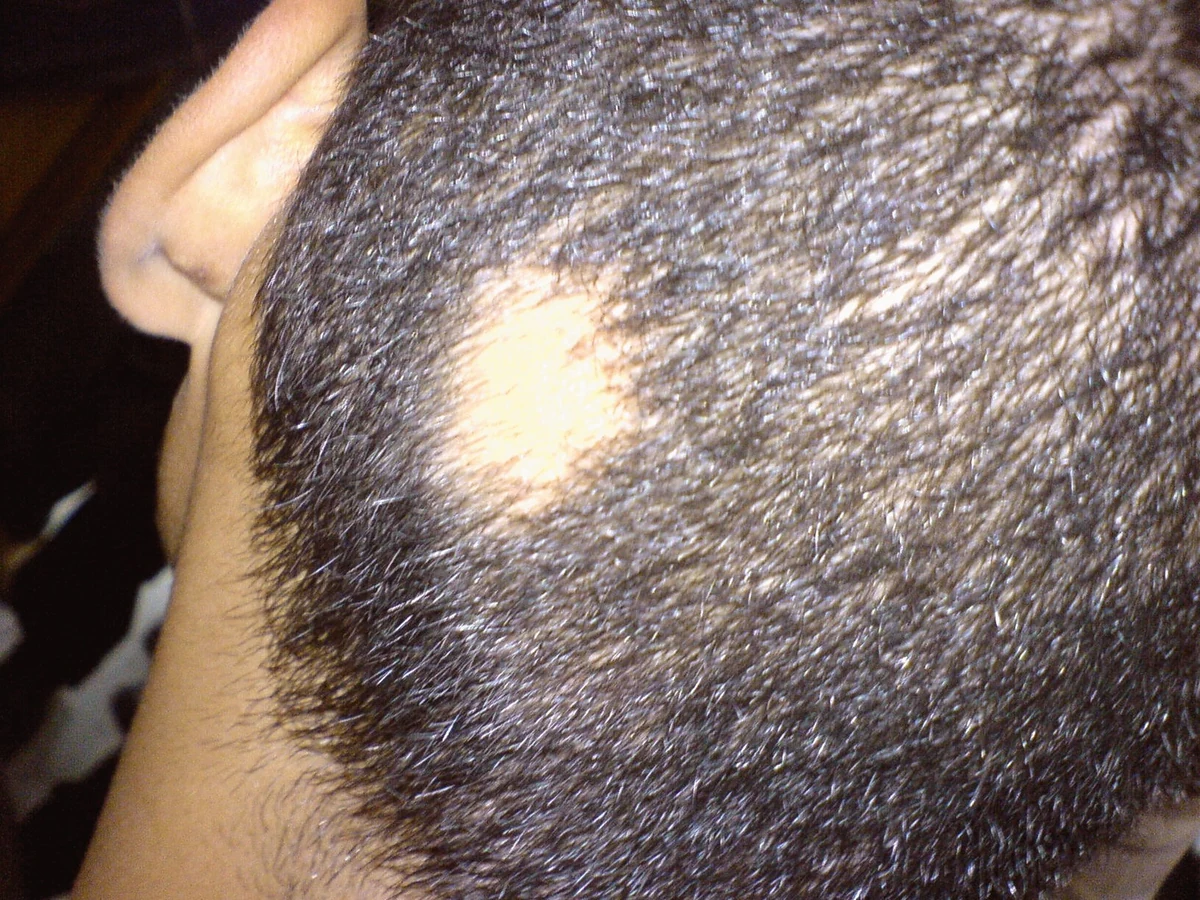
A typical patch has a clear edge and fairly smooth skin. It may appear on the scalp or beard, and eyebrows or eyelashes can also be affected.
Other clues include:
- Short hairs near the edge that are thinner close to the scalp.
- Tiny dents or changes in the texture of the nails.
- Hair returning in one area while another patch develops.
The short, tapered hairs are sometimes called exclamation-mark hairs because of their shape. You do not need to find them yourself; they are a clue a clinician may look for during an examination.
Not every person has every sign, and alopecia areata can occasionally cause more widespread thinning. The AAD’s guide to signs and symptoms shows how its appearance can vary.
Why does it happen—and is stress to blame?
Researchers understand that the immune system is involved, but they cannot fully explain why it starts targeting the follicles in a particular person.
Genes can contribute to susceptibility. Having an affected relative raises the possibility, but it does not mean you will inevitably develop the condition.
Stress or an illness may precede an episode in some people. In many others, there is no obvious trigger. The US National Institute of Arthritis and Musculoskeletal and Skin Diseases describes that uncertainty.
So “you need to stop worrying” is neither a useful explanation nor a treatment plan. Someone can develop alopecia areata during a settled period of life, and losing hair can itself be stressful.
Could the bald patch be something else?
Yes. A round patch is a reason to seek a diagnosis, rather than assume you already have one.
| What you notice | Another possibility a clinician may consider |
|---|---|
| Scale, itching and broken hairs | A fungal scalp infection, sometimes called scalp ringworm |
| An irregular patch with hairs of different lengths | Repeated hair pulling or other mechanical damage |
| Pain, burning, inflammation or changes in the skin | An inflammatory condition, including a form of scarring hair loss |
| Gradual thinning rather than a distinct patch | Pattern hair loss or another cause of thinning |
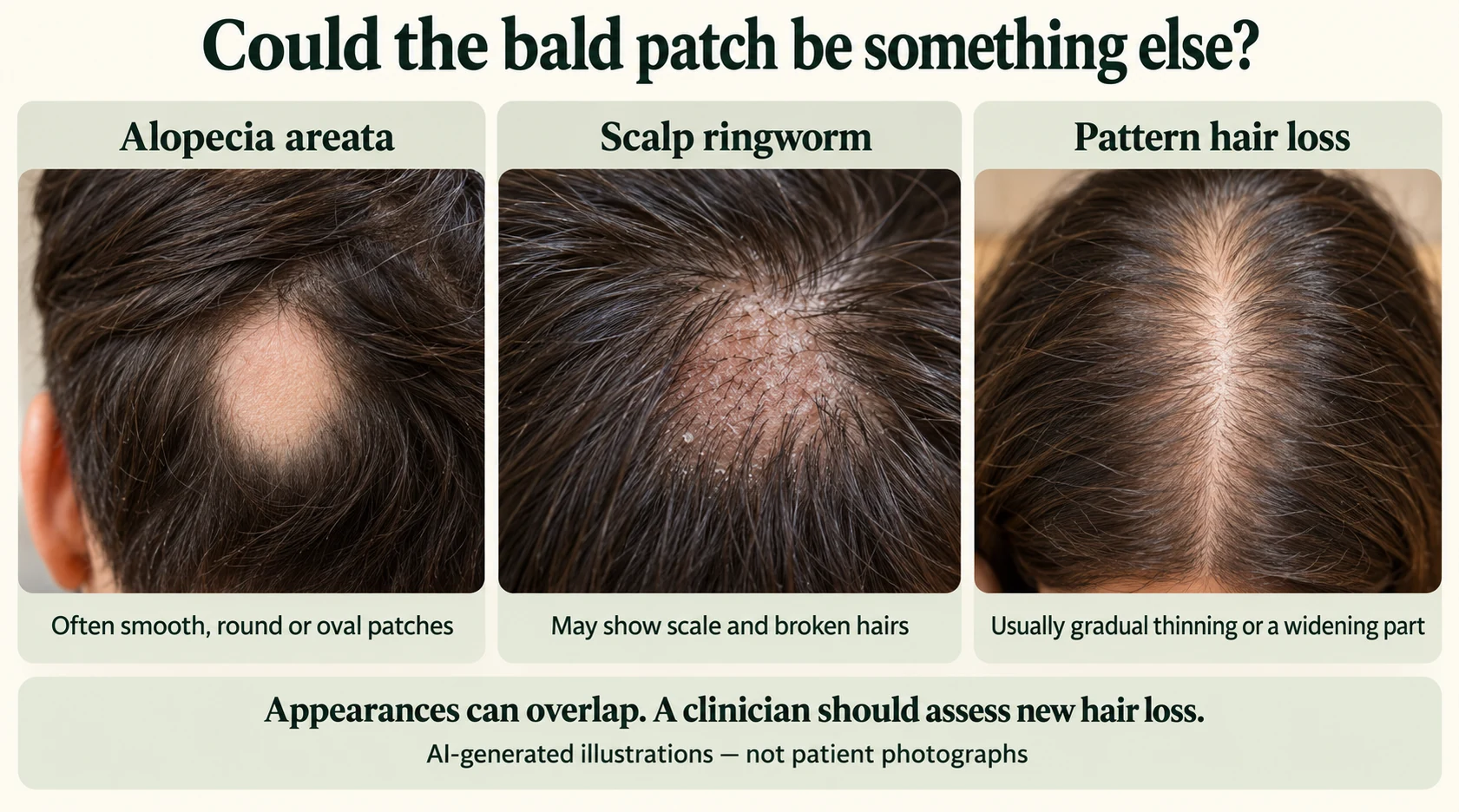
These are clues, not a home diagnostic checklist. DermNet’s alopecia areata guidance explains the overlapping conditions.
A fungal infection needs a different approach. Scalp ringworm can cause scaling and broken hairs, and some inflammatory forms can damage follicles permanently. Arrange an assessment promptly if a patch is painful, swollen, crusted or producing pus.
For a broader look at different patterns, read Why Is My Hair Falling Out? 12 Causes and What to Do.
What will a doctor check?
A GP, primary care clinician or dermatologist will usually ask when the loss began, how it has changed, and about your health, medicines and family history.
They may examine your scalp, other affected areas and nails. A dermatoscope is a handheld magnifying tool that helps them see details around the hairs and follicles.
A biopsy—a small sample of skin—is sometimes needed when the diagnosis remains uncertain. It is not a routine requirement for every bald patch.
Blood tests are also individual decisions. The British Association of Dermatologists’ clinical guideline says investigations are unnecessary in most cases and testing for associated conditions should depend on the person’s history and presentation.
That means you do not automatically need a large “hair-loss blood panel.” Ask what a proposed test is looking for and how the result would change your care.
Will the hair grow back?
It can. Some people with limited patches regrow hair without treatment; others need treatment, experience repeated episodes or have persistent loss.
Early regrowth may look fine, pale or white before becoming thicker or regaining colour. A patch does not automatically mean that all your hair will fall out.
More extensive forms have separate names: alopecia totalis means loss of all or nearly all scalp hair; alopecia universalis involves scalp, facial and body hair. These are possible forms of the condition, not stages that everyone passes through.
The British Association of Dermatologists’ patient leaflet explains why the outlook varies. Be cautious of anyone promising a fixed regrowth date or a permanent cure.
Which alopecia areata treatments can help?
The choice depends on the amount and location of hair loss, how long it has been present, your health and how much it affects your life. There is no single treatment that suits everyone.
Monitoring a small patch
After confirming the diagnosis, a clinician may suggest observation for limited, recent hair loss. This should include a plan for follow-up and what to do if it spreads.
Choosing to monitor is different from having your concern dismissed.
Corticosteroids for patchy hair loss
Corticosteroids reduce inflammation. A dermatologist may use injections into affected patches or prescribe a preparation applied to the skin.
They can help regrowth, particularly in limited disease, but results vary. Injections can be uncomfortable, and local skin thinning or small dents can occur. The BAD patient leaflet describes these benefits and limitations.
Treatments for more extensive loss
Specialist options include contact immunotherapy, a treatment applied to the skin to provoke a controlled immune reaction, and medicines that act on immune activity throughout the body.
Contact immunotherapy requires supervision and can cause an uncomfortable skin reaction. The AAD treatment guide explains how specialists select treatments according to the extent of loss.
One group of oral medicines is called JAK inhibitors. JAKs help pass messages involved in inflammation; blocking some of those messages can allow hair growth to resume in some people with severe alopecia areata.
These medicines require an individual risk assessment and monitoring. Important risks include serious infections and warnings about blood clots, certain cancers and cardiovascular events. Much of the safety evidence that prompted broader warnings came from older patients with rheumatoid arthritis and additional risk factors; it cannot simply be treated as the same risk estimate for every person with alopecia areata.
The UK medicines regulator’s safety guidance explains why personal health history matters. Availability, eligibility and funding differ between countries.
What about minoxidil?
A clinician may use minoxidil alongside other treatments to support regrowth. It does not directly address the immune reaction, and evidence for it as a treatment on its own is limited.
Do not assume that a product used for pattern hair loss is the right answer for a new bald patch—or apply scalp products around your eyes without medical advice.
What does the research actually show?
In two major trials published in the New England Journal of Medicine in 2022, adults with severe alopecia areata received a JAK inhibitor or placebo—a comparison treatment without the active drug.
At 36 weeks, around 36–39% in the higher-dose treatment groups had no more than 20% scalp hair loss, compared with around 3–6% in the placebo groups. You can read the original study abstract.
That is meaningful improvement for some patients. It also shows that many had not reached that outcome by that point. It was not a promise of complete regrowth, and the study concerned severe disease rather than every small bald patch.
A treatment’s value comes from weighing its likely benefit, risks and ongoing burden for the person considering it.
Do oils, vitamins or a special diet treat it?
There is no established diet that reliably switches off alopecia areata.
The 2026 S3 clinical guideline does not recommend dietary supplements as a treatment for alopecia areata on the available evidence. It also notes insufficient evidence for several alternative approaches, including onion preparations and aromatherapy.
An identified nutritional deficiency is a separate issue that may need care. It does not make a supplement a proven treatment for this autoimmune condition.
Be especially wary of “immune-boosting” hair products. Alopecia areata is not explained by an immune system that simply needs boosting.
Before paying for a remedy, ask: was it studied in people with alopecia areata, or is the seller talking about a completely different kind of hair loss?
What can you do while waiting for an appointment?
A few useful steps can make the appointment easier and protect the affected skin:
- Keep a simple record. Note when you first noticed the patch and take occasional photographs in similar lighting. Daily checking is unlikely to make the changes easier to judge.
- Use gentle styling. Avoid pulling tightly on the surrounding hair or repeatedly rubbing the patch.
- Protect exposed skin. Use a hat or suitable broad-spectrum sunscreen outdoors.
- Bring a medicine and supplement list. Include products you have already tried and any irritation they caused.
The AAD’s self-care advice supports gentle hair care and sun protection.
If eyebrows or eyelashes are affected, mention eye discomfort too. These hairs help protect the eyes, and their loss may need practical advice beyond scalp treatment.
The emotional side deserves care too
A bald patch can affect how comfortable you feel at work, in photographs or around other people. You do not have to wait for extensive loss before saying it bothers you.
A wig, hairpiece, head covering or a decision to leave the area visible can all be valid choices. There is no obligation to hide it, and no obligation to show it.
Tell your clinician if hair loss is affecting your sleep, confidence or social life. The NIAMS guidance on living with alopecia areata includes emotional support as part of care.
Frequently asked questions
Is alopecia areata contagious?
No. It is an autoimmune condition, not something you catch from another person. However, an undiagnosed bald patch could have another cause, including a contagious fungal infection.
Can it affect the beard?
Yes. Alopecia areata can cause beard patches as well as scalp, eyebrow or eyelash loss. A clinician should check new beard patches rather than assume the cause.
Is it the same as DHT-related hair loss?
No. DHT-related pattern hair loss involves a different process from the immune reaction in alopecia areata. Read our DHT and hair loss guide for that distinction.
How long should I wait before getting a patch checked?
Book an assessment when you notice a new unexplained patch. Seek a prompt appointment if it is spreading quickly or accompanied by pain, swelling, pus or marked inflammation.
Conclusion: understand the patch before choosing a treatment
Alopecia areata can interrupt hair growth without permanently destroying the follicles, so regrowth is possible. Its course varies, and treatment should reflect your diagnosis, health and priorities.
The most useful first step is an assessment—not a collection of products bought on the strength of a before-and-after photo. Understanding the cause gives you a better basis for deciding what help you want.
Read next
- Why is my hair falling out? — an overview of other possible causes.
- Telogen effluvium — understanding increased shedding after stress or illness.
- Female pattern hair loss — a closer look at gradual thinning.


One Response