

Hair Loss & Thinning · Guide 9
Traction Alopecia: Is Your Hairstyle Pulling Too Hard?

In this guide
- What is traction alopecia?
- Which hairstyles can cause it?
- What does traction alopecia look like?
- Can the hair grow back?
- What to change first: a practical styling reset
- What treatments might a clinician recommend?
- Could the thinning be something else?
- Three myths worth leaving behind
- Frequently asked questions
- The takeaway
- Read next
A hairstyle should not need a few painful days to “settle in.”
If your braids sting, your bun leaves your scalp sore, or your ponytail keeps pulling at your temples, it is worth loosening the style. Repeated tension can cause traction alopecia, a type of hair loss that begins with pulling on the hair.
That does not mean you have to give up every style you enjoy. It means paying attention to how a style is secured, how heavy it is, and whether the same hairs are being pulled again and again.
The useful first step: remove the pulling. If hair loss has already appeared, arrange a clinical assessment rather than relying on a growth oil or waiting for the next hairstyle to hide it.
What is traction alopecia?
“Traction” means pulling. “Alopecia” means hair loss.
With traction alopecia, repeated pulling puts strain on the hair follicles—the small structures in your skin that produce hair. It is often linked to tight styling, although the weight of extensions or very long hair can also contribute.
DermNet’s clinical guide explains that early traction alopecia may occur without scarring. Continued tension can eventually destroy follicles and leave permanent hair loss.
This distinction matters: a follicle that is still functioning may recover, while one replaced by scar tissue cannot grow a new hair.
Traction alopecia can affect people of any sex, age or ethnic background. The relevant question is what is pulling on the hair, rather than whether someone belongs to a particular group.
Which hairstyles can cause it?
The name of a hairstyle does not tell you how much strain it creates. A loosely secured ponytail is different from one pulled tightly against the scalp.
Styles associated with traction include:
- Tight ponytails, buns and updos.
- Braids, cornrows or locs installed or maintained with excessive tension.
- Heavy extensions and tightly attached weaves.
- Repeated pulling from clips or other attachments.
The American Academy of Dermatology (AAD) advises changing a style immediately if it causes pain, stinging, crusting or visible lifting of the scalp.
A “protective style” should protect the hair in practice, too. The label does not cancel out tension.
For people who cover their hair, consider the style underneath and how the covering is secured. A tightly pulled bun or attachment can strain the hair. You can discuss gentler arrangements with a stylist while respecting your cultural, religious or work requirements.
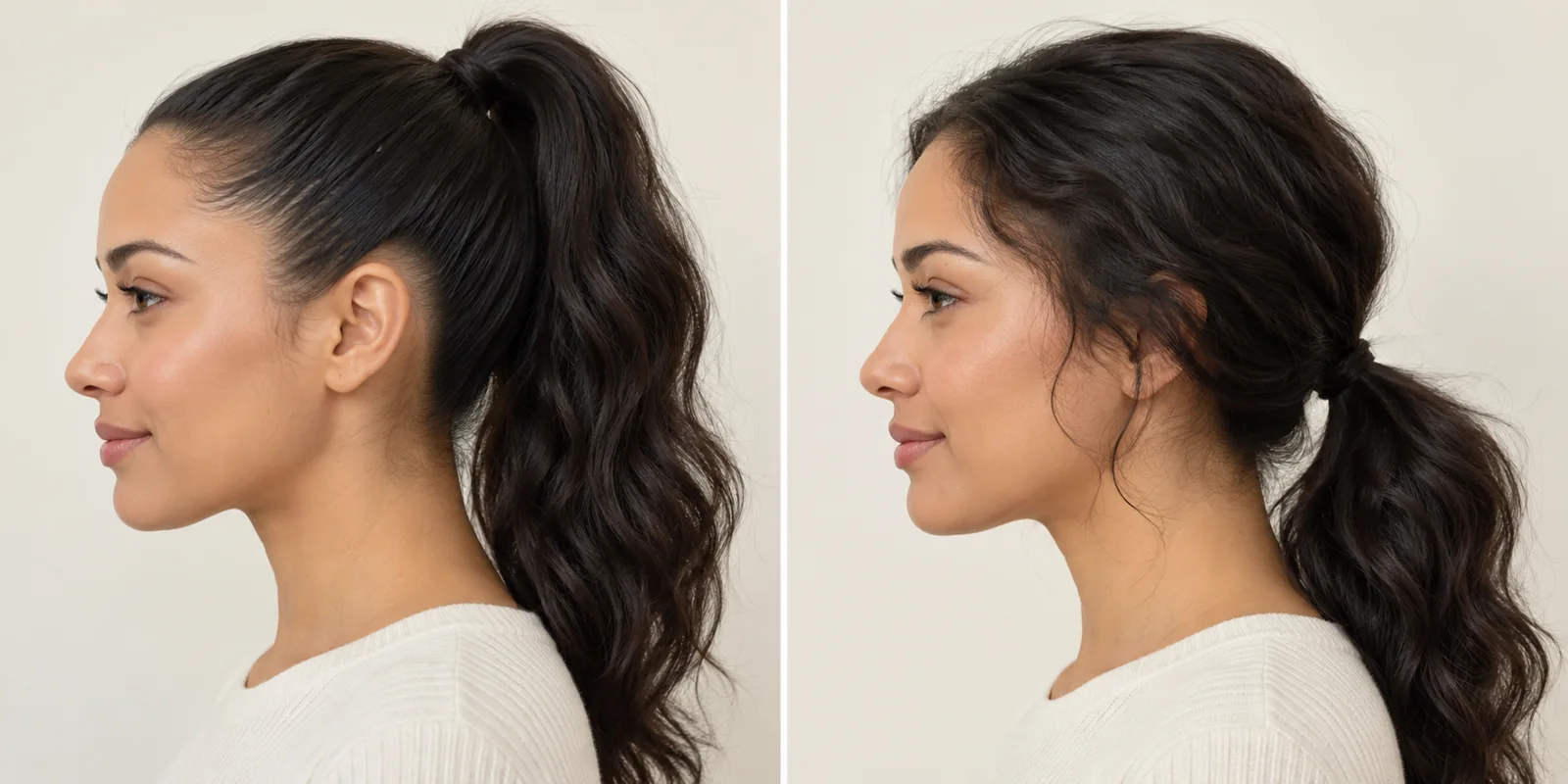
What does traction alopecia look like?
You may notice short broken hairs, thinning at the temples, or patches where hair is repeatedly pulled. It can also affect other parts of the scalp, depending on the hairstyle.
There may be itching, soreness, scaling or small inflamed bumps. Some people retain a narrow rim of hair at the front of a thinning area. Clinicians call this the fringe sign, but it is a clue—not a reliable way to diagnose yourself.
DermNet describes these possible features of traction alopecia. Appearance varies, and several other conditions can look similar.
If you want to document a change, take occasional photographs with your hair relaxed, using similar lighting and angles. Save them for your appointment. Daily comparisons in different lighting can make it difficult to judge what is actually changing.
Can the hair grow back?
Sometimes, especially when the pulling stops before permanent damage develops.
The British Association of Dermatologists (BAD) notes that regrowth may begin around three months after the damaging styling stops. That is a possible starting point, not a deadline or a promise of full recovery.
How much hair returns depends on the condition of the follicles. A clinician may need to examine the scalp to assess this.
An area that looks smooth and shiny deserves assessment, but a photograph alone cannot confirm scarring. Do not assume that the hair is permanently lost—or definitely recoverable—because it resembles an image online.
While you wait for an appointment, you do not need to keep the pulling style in place.
What to change first: a practical styling reset
Start with the parts of your routine that you can change today.
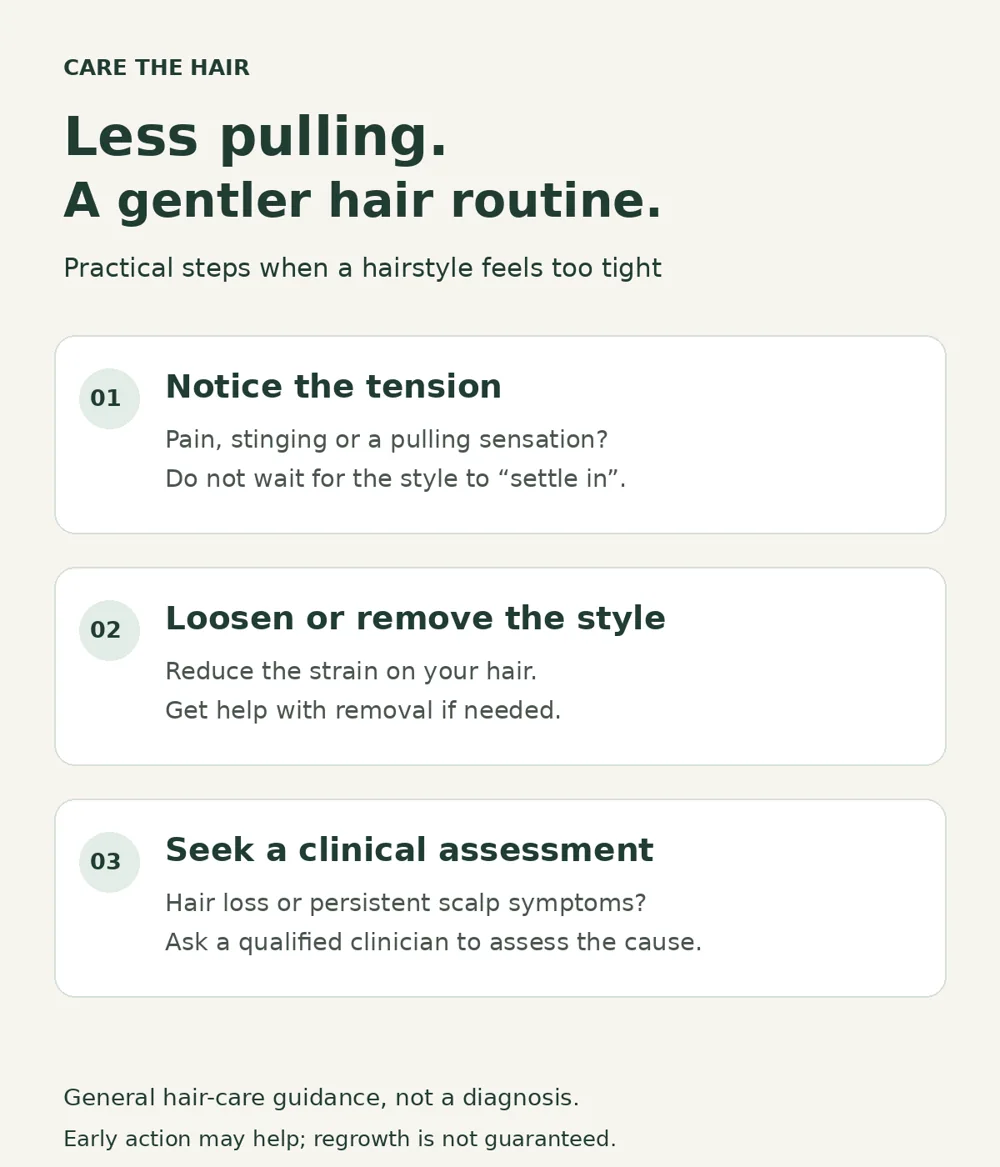
1. Loosen the style that is causing discomfort
If the pulling comes from a ponytail or bun, loosen or remove it. For extensions or a complex installed style, ask for help removing or adjusting it gently.
At your next appointment, be specific: “Please leave my hairline relaxed. I do not want a style that hurts.”
Comfort is useful feedback, although the absence of pain does not prove that a repeatedly tight style is harmless.
2. Choose an option you can actually maintain
A gentler routine needs to fit your life. Consider loosely secured hair, a relaxed braid, or wearing your hair down when practical.
For work or sport, ask whether a less tightly secured arrangement would meet the same requirement. The aim is to reduce strain rather than simply move a tight style to another part of the scalp.
3. Discuss weight as well as tightness
If you use extensions, tell your stylist about any thinning before installation. Ask how to reduce both attachment tension and added weight.
Do not cover a thinning area with something that pulls on the remaining hair. Camouflage is only helpful if it does not add to the problem.
4. Keep the rest of your hair care gentle
Condition your hair and detangle carefully rather than repeatedly tugging through knots. Limit excessive heat, and avoid combining tight styling with harsh chemical processing.
The AAD’s hair-care guidance explains how rough handling, heat and chemical treatments can contribute to breakage. Protecting the hair shaft helps reduce additional damage, but it does not reverse follicle scarring.
5. Make a short record for your clinician
Write down when the thinning began, which styles you wear, whether there is discomfort, and what you have already changed. Bring photographs if you have them.
Useful questions include: “Does this look like traction, or could another condition be involved?” and “Is there evidence that the follicles can still recover?”
What treatments might a clinician recommend?
Removing tension remains central to treatment. Medicines cannot compensate for continued pulling.
Depending on the examination, a clinician may consider:
Treatment for inflammation. Prescription steroid preparations or injections may be used for selected inflamed areas. These require appropriate supervision because side effects can include skin thinning or changes in pigmentation.
Topical minoxidil. This hair-growth medicine is sometimes considered when follicles remain viable. It can irritate the scalp or cause unwanted facial hair. It is not a guaranteed treatment for traction alopecia.
The BAD outlines these treatment options and their limitations. A peer-reviewed clinical review by Billero and Miteva also highlights the need for stronger treatment research; its full-text discussion notes that optimal minoxidil use for traction alopecia is not firmly established.
Do not start treatment solely because it worked for someone online. Tell your clinician if you are pregnant, breastfeeding or trying to conceive: NHS patient guidance advises against minoxidil in these circumstances because safety has not been established.
For established permanent loss, camouflage or specialist surgical assessment may be discussed. Surgery is a separate decision involving suitability, risks and cost—not an automatic next step.
Could the thinning be something else?
Yes. Hairline thinning does not always come from styling.
Alopecia areata can cause bald patches through an immune process. Female pattern hair loss commonly causes gradual thinning, while telogen effluvium involves increased shedding.
Another condition, frontal fibrosing alopecia, can cause a receding hairline and sometimes eyebrow loss. It is a form of scarring hair loss described in the BAD’s patient information.
These examples are reasons to seek assessment, not a checklist for choosing your own diagnosis.
Arrange an appointment if thinning progresses, patches appear, symptoms persist, or you are unsure what is happening. Ask for prompt advice about a painful or inflamed scalp, particularly if there are sores or discharge.
Three myths worth leaving behind
“Braids are always bad for hair.”
Not all braids create the same tension. Installation, maintenance and added weight matter.
“A growth oil will undo the pulling.”
A product cannot remove the force from a tight attachment. There is no established evidence that an oil restores follicles destroyed by scarring.
“It will grow back as soon as I take the style out.”
Removing the strain is important, but visible recovery takes time and depends on how much damage has occurred. Avoid products promising guaranteed regrowth within days.
Frequently asked questions
Can a daily ponytail cause traction alopecia?
It can if it repeatedly pulls tightly. Consider how it feels and whether the same areas are under strain, rather than assuming every ponytail is harmful.
Is traction alopecia the same as hair breakage?
No. Breakage affects the hair strand. Traction alopecia involves hair loss from repeated pulling on follicles. They can occur together, which can make the appearance confusing.
Is traction alopecia permanent?
It can be. Earlier changes may improve after tension stops, while established follicle scarring causes permanent loss. An examination helps clarify what is likely in your case.
Should I wait three months before seeing a doctor?
No. A possible regrowth timeline is not a reason to delay assessment. You can change the hairstyle and seek advice at the same time.
Can I wear a wig while my hair recovers?
Discuss the fit and attachment method. Avoid tight braiding underneath or attachments that strain the thinning area. Comfort and gentle securing matter more than the product label.
The takeaway
You do not need to abandon your identity or every hairstyle you love. Start by reducing repeated pulling, especially when a style hurts or your hairline is changing.
If thinning is already present, a clinical assessment can help distinguish traction alopecia from other causes and identify realistic treatment options. Earlier action gives you a better opportunity to protect the hair you still have.