
Hair Loss & Thinning
Thyroid Hair Loss: Causes, Symptoms and What Can Help
In this guide
- How Does Thyroid Disease Cause Hair Loss?
- Thyroid Hair Loss Symptoms: What Might You Notice?
- Could Your Hair Loss Have Another Cause?
- How Is Thyroid Hair Loss Diagnosed?
- Thyroid Hair Loss Treatment: What Can Help?
- Thyroid Hair Loss Regrowth: Will Your Hair Grow Back?
- Hair Care During Thyroid Hair Loss
- FAQs About Thyroid Hair Loss
- When Should You Seek Help?
You notice more hair in the shower. Your ponytail feels thinner. At first, you wonder whether you need a different shampoo. Then you start asking a bigger question: could something inside your body be causing it?
Your thyroid is one possible cause. This small gland can affect your energy, body temperature and hair. When it is not working properly, hair changes may become part of the picture.
But hair thinning alone does not prove that you have thyroid disease. The useful first step is to find out what is causing the change. That gives you a better chance of choosing treatment that helps.
How Does Thyroid Disease Cause Hair Loss?
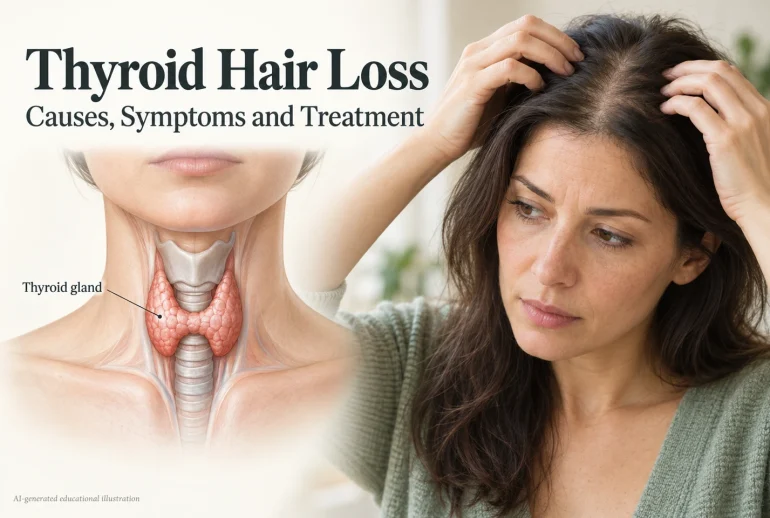
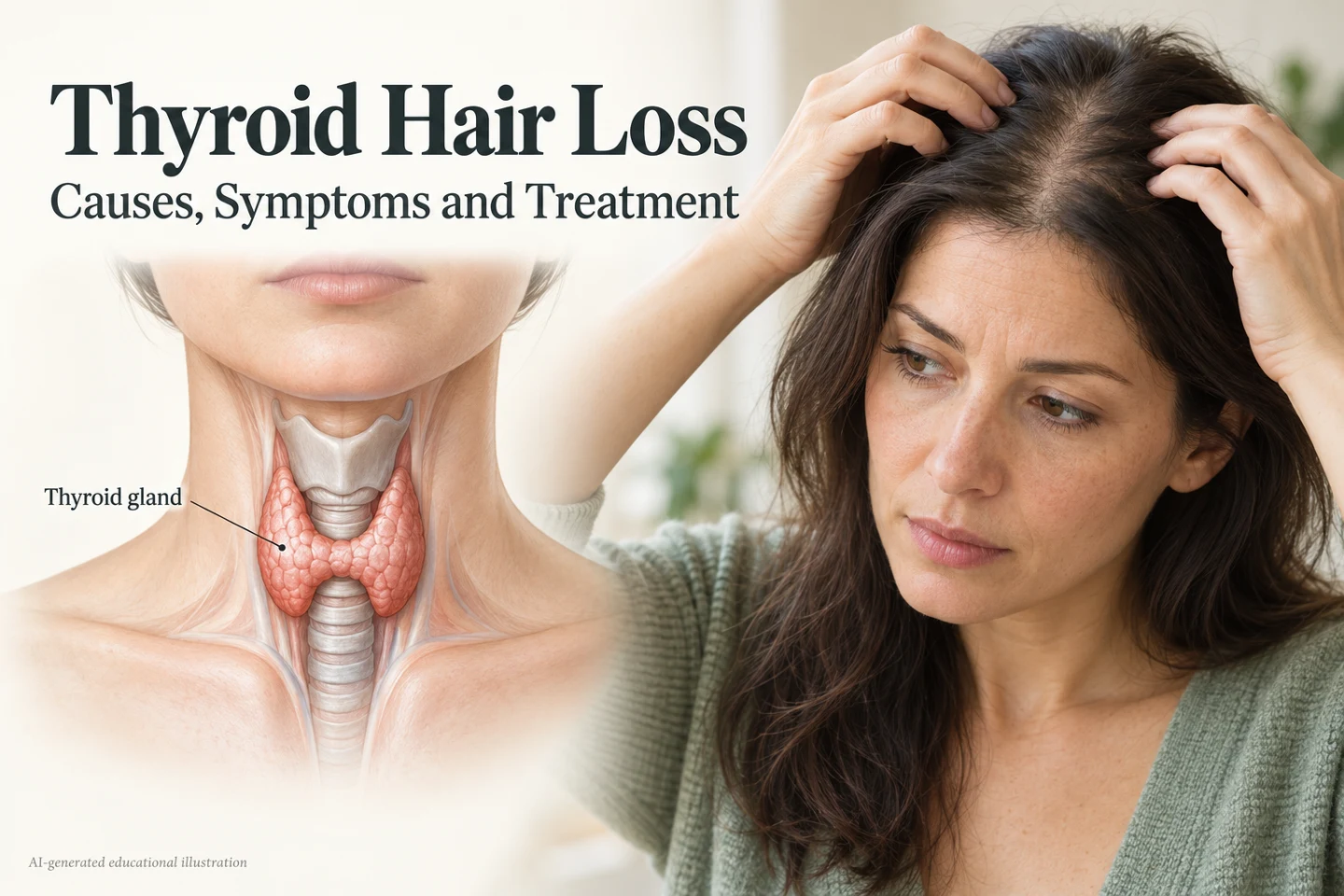
Your thyroid gland sits at the front of your neck. It makes hormones that help your body use energy. These hormones support many functions throughout your body. American Thyroid Association: thyroid function.
Two conditions can affect how much thyroid hormone it produces:
- Hypothyroidism: an underactive thyroid that does not make enough thyroid hormone.
- Hyperthyroidism: an overactive thyroid that makes too much thyroid hormone.
You might expect these opposite problems to have opposite effects on your hair. Yet both can cause hair loss, especially when the imbalance is severe or lasts a long time. Mild or short-lived thyroid problems are less likely to cause noticeable thinning. British Thyroid Foundation: hair loss and thyroid disorders.
This matters when you receive your blood results. A small change in a thyroid test should not automatically become the explanation for all your hair loss.
Ask your doctor: “Could this thyroid result explain the thinning, or should we check for another cause?”
Thyroid Hair Loss Symptoms: What Might You Notice?
Thyroid-related hair loss often causes diffuse thinning. This means the hair looks less full across the scalp rather than disappearing from one distinct patch. Read the BTF explanation.
You may notice more shedding during washing or brushing. However, these changes can happen with other types of hair loss too. Your doctor needs to consider your scalp, symptoms and medical history together.
Other symptoms may offer useful clues.
Hypothyroidism Symptoms
An underactive thyroid can cause:
- Ongoing tiredness.
- Feeling cold more than usual.
- Weight gain.
- Constipation.
- Dry skin or dry hair.
- Difficulty concentrating.
- Heavy or irregular periods.
These symptoms often develop slowly. You might blame the tiredness on work or assume that feeling cold is normal for you. Mention them at your appointment, even if they seem unrelated to your hair. NHS: underactive thyroid symptoms.
Hyperthyroidism Symptoms
An overactive thyroid may cause:
- Feeling unusually hot.
- Increased sweating.
- Shaky hands.
- A fast or irregular heartbeat.
- Weight loss despite a normal or increased appetite.
- Hair thinning.
These symptoms need medical assessment. They cannot confirm hyperthyroidism on their own. NHS: overactive thyroid symptoms.
Rather than trying to match every symptom online, write down what has changed. That gives your doctor a clearer starting point.
Could Your Hair Loss Have Another Cause?
Having thyroid disease does not mean every hair problem comes from your thyroid.
For example, increased shedding can follow an illness, childbirth or major stress. This is often called telogen effluvium. The shedding may begin a few months after the trigger. Inherited pattern hair loss can also develop gradually. Some people have both shedding and another type of hair loss. AAD: hair loss and hair shedding.
A round bald patch needs a separate assessment. Alopecia areata is one possible cause. It is an autoimmune condition and occurs more often in people with autoimmune thyroid disease. BTF: associated hair loss conditions.
Our alopecia areata guide explains its signs and treatment options.
Tell your doctor about the pattern you have noticed. Is your hair shedding everywhere? Is your parting gradually widening? Have you found a distinct patch? These details help guide the assessment.
How Is Thyroid Hair Loss Diagnosed?

If your hair keeps thinning or the shedding worries you, book an appointment. You do not need to wait until the change becomes severe.
Your doctor can examine your scalp and ask about your health. They can then decide whether you need thyroid blood tests or other investigations.
Thyroid testing commonly includes:
- TSH: thyroid-stimulating hormone. It signals the thyroid gland to produce hormones.
- Free T4: a measurement of thyroid hormone available in your blood.
TSH is often the first test. Free T4 helps your doctor understand the result. Other tests may be needed in some situations. You do not necessarily need every thyroid test available. ATA: thyroid function tests.
Before your appointment, note when the hair loss began. Bring a list of your medicines and supplements. Older photographs may also help show the change.
A useful question is: “Does my hair loss fit a thyroid problem, or does my scalp need further assessment?”
Tell Your Doctor About Biotin Supplements
Do you take a supplement for hair, skin or nails? Check whether it contains biotin, also called vitamin B7.
Biotin can interfere with some thyroid blood tests. It may produce misleading results without changing how your thyroid is actually working.
Tell your doctor and the testing service before your blood test. Ask whether you should pause the supplement and for how long. Bring the packaging or a photograph of the label. ATA: biotin and thyroid blood tests.
Thyroid Hair Loss Treatment: What Can Help?
If thyroid disease is contributing to your hair loss, treatment focuses on managing the thyroid condition.
Treatment for Hypothyroidism
An underactive thyroid is usually treated with levothyroxine. This medicine replaces the thyroid hormone your body is not making in sufficient amounts.
Your doctor uses blood tests to check your treatment and adjust the dose when necessary. Do not change the dose yourself because your hair is still thinning. NHS: hypothyroidism treatment.
Treatment for Hyperthyroidism
An overactive thyroid needs a different approach. Treatment may include antithyroid medicines, radioactive iodine or surgery.
The choice depends on the cause, your health and your circumstances. Your specialist can explain the benefits and risks of each suitable option. NHS: hyperthyroidism treatment.
What if Hair Shedding Starts After Treatment?
This can feel confusing. You begin treatment, then notice more hair coming out. It is understandable to wonder whether the medicine caused it.
However, thyroid-related shedding can appear months after the hormone problem began. The timing may overlap with the start of treatment. Speak to your prescriber before stopping or changing any medicine. They can review your results and consider possible side effects. BTF: hair loss and treatment timing.
Thyroid Hair Loss Regrowth: Will Your Hair Grow Back?
Hair often regrows after successful thyroid treatment. However, this takes several months, and recovery may be incomplete. BTF: hair regrowth expectations.
It helps to agree on a follow-up plan. Ask your doctor when to review your hair loss and what to do if it continues.
If your thyroid levels improve but thinning carries on, bring it up again. Another cause may need attention. Your doctor may suggest further assessment or a referral to a dermatologist.
You can keep an occasional photo record. Use similar lighting, the same parting and the same angle. This makes comparisons more useful than checking your hair under different lights each day.
Hair Care During Thyroid Hair Loss
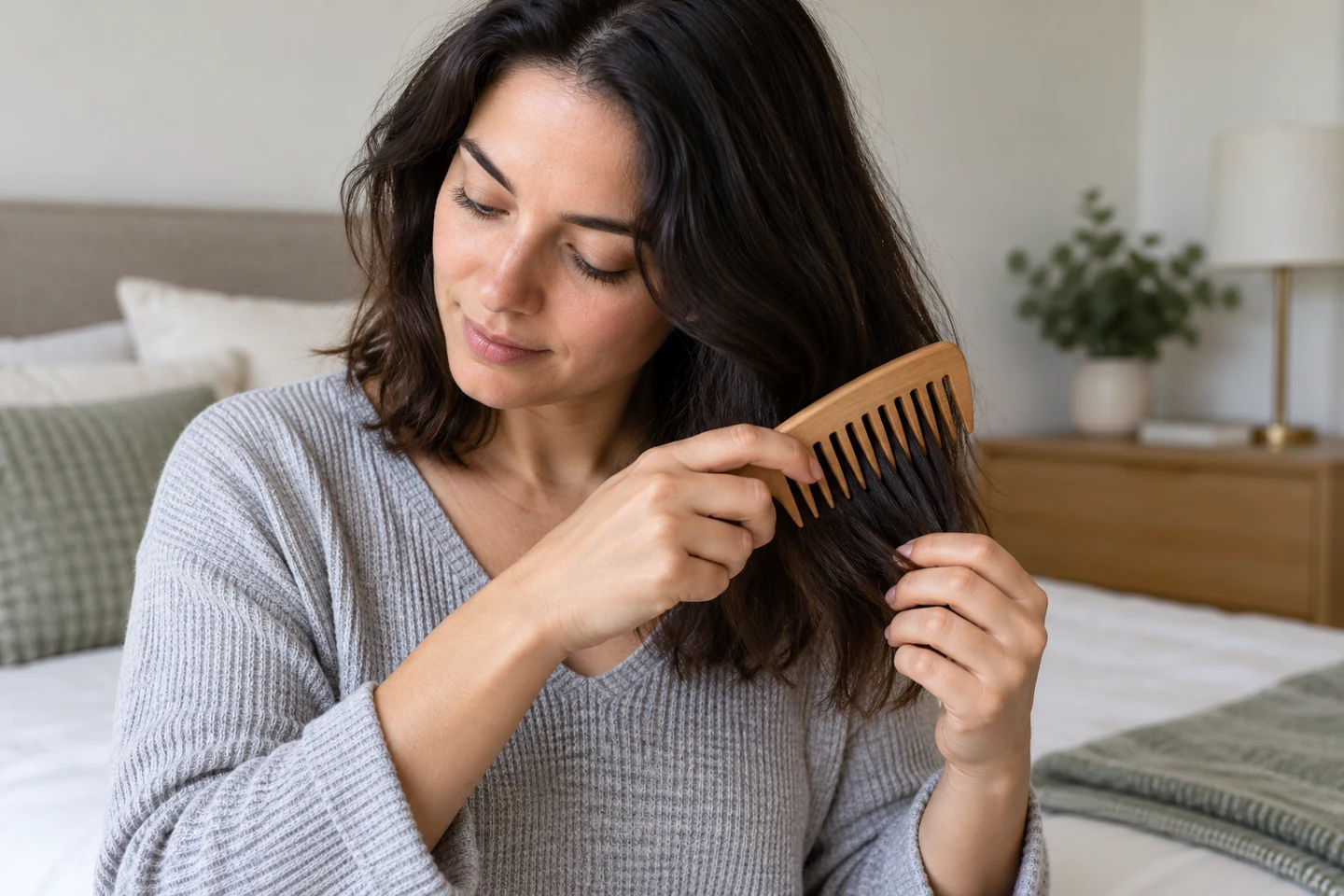
While you follow your treatment plan, keep your hair routine gentle.
Choose comfortable styles that do not pull on your scalp. Detangle carefully. Reduce repeated heat styling if your hair feels fragile. These steps can limit extra damage, but they cannot correct a thyroid hormone imbalance.
Be cautious with supplements too. Iron and calcium supplements can affect levothyroxine absorption. Ask your pharmacist how to separate them from your medicine. Kelp supplements contain iodine and can also be unsuitable for people taking levothyroxine. NHS: levothyroxine.
Before buying a hair supplement, check whether you need it and whether it could interfere with your treatment.
It is also reasonable to want your hair to look fuller while you wait. A different parting or a comfortable haircut may help. Tell your hairdresser that your hair is thinning so they can suggest gentle styling options.
FAQs About Thyroid Hair Loss
Does Hair Loss Mean I Have Thyroid Disease?
No. Hair loss has several possible causes. Your doctor will consider your other symptoms and decide whether thyroid testing would help.
Can Both Hypothyroidism and Hyperthyroidism Cause Hair Loss?
Yes. Both can affect hair, particularly when the thyroid imbalance is severe or prolonged. A diagnosis still needs medical assessment.
Should I Increase My Thyroid Medicine to Improve Hair Growth?
No. Take the prescribed dose. Too much thyroid medicine can cause harm. Discuss continued thinning with your doctor so your treatment and hair loss can be reviewed. NHS: taking levothyroxine safely.
What if My Thyroid Tests Are Normal but My Hair Is Still Thinning?
Ask about a scalp assessment and other possible causes. A normal thyroid result helps narrow the investigation. It does not explain the hair loss by itself.
When Should You Seek Help?
Book an appointment if your hair loss continues, becomes more noticeable or worries you. Mention any changes in your energy, weight, temperature tolerance or heartbeat.
If you already have thyroid disease, ask whether your treatment is keeping your hormone levels in the right range. Also ask whether another cause could be affecting your hair.
You do not need to solve this alone. A useful plan should explain what may be causing the loss, what treatment is intended to help and when to review your progress.
This article is for general education. A qualified clinician should assess your symptoms and advise on your individual care.

One Response